

Nothing and its budget sub-brand CMF are, on paper, playing the exact same game: distinctive design, clean Android software, and a price that undercuts Samsung and Xiaomi's equivalent tiers. Look at the spec sheets side by side, and they can look almost identical, same size AMOLED screen, same peak brightness, same camera megapixel count. But these two phones are actually built around two completely different ideas of what makes a phone interesting, and picking between them comes down to which idea you actually care about, not which spec sheet number is bigger.

The Quick Answer
The Nothing Phone (3a), at ₹24,999, is the better all-round phone, with a faster processor, better cameras, stronger dust resistance, and Nothing's signature Glyph LED interface. The CMF Phone 2 Pro, at ₹17,499 to ₹18,999, undercuts it by roughly ₹6,000 to ₹7,500 while matching it on display quality and delivering surprisingly close real-world performance, making it the sharper value pick if budget matters more to you than having the flagship-feeling Nothing design language.
Two Completely Different Design Philosophies
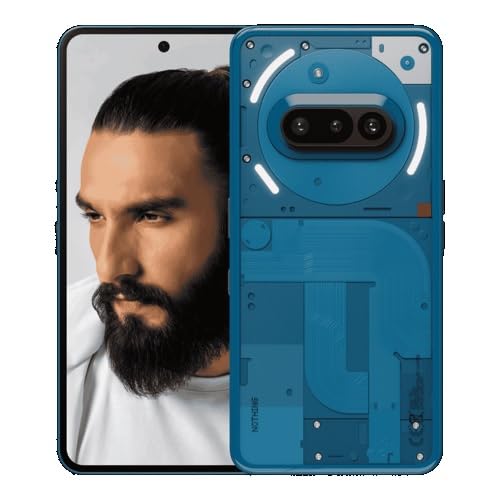
This is genuinely the core of the decision, more than any single spec. The Nothing Phone (3a) builds on Nothing's signature identity: a glass back with a faux-transparent design revealing decorative internals, and the Glyph Interface, three customizable LED light strips that light up for calls, notifications, and charging progress. It's a phone designed to look like nothing else on the market, deliberately, and if you've ever wanted people to notice your phone from across a room, this is what does it.
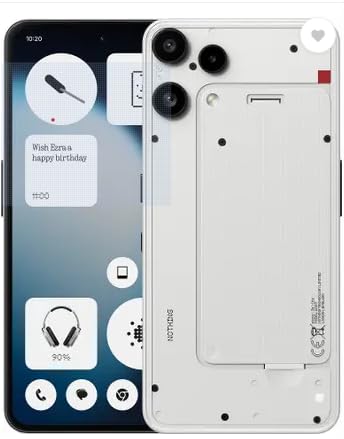
The CMF Phone 2 Pro takes the opposite approach entirely. Instead of decorative lighting, it offers genuine functional modularity, a swappable plastic back panel with a rotating dial that lets you attach real accessories: a magnetic wallet, a kickstand, or even clip-on macro and fisheye camera lenses. It looks industrial rather than futuristic, with visible screws as a deliberate style choice rather than something hidden away. Where the Nothing Phone wants to be looked at, the CMF Phone wants to be customized and used.
Neither approach is objectively better; they're just aimed at different people. If you want a phone that turns heads with lighting and a premium glass feel, the Nothing Phone (3a) wins outright. If you'd rather have a phone that adapts to your actual needs with physical accessories, the CMF Phone 2 Pro's modularity is the more genuinely useful idea, even if it looks less flashy in photos.
Performance: Faster on Paper, Closer in Practice
The Nothing Phone (3a) runs on a Qualcomm Snapdragon 7s Gen 3, while the CMF Phone 2 Pro uses a MediaTek Dimensity 7300 Pro. On paper and in benchmark testing, the Snapdragon chip is genuinely faster. Independent testing found roughly 11% better CPU performance and up to 50% better GPU performance in synthetic benchmarks, and that advantage shows up in real gaming too, with the Phone (3a) comfortably running Call of Duty: Mobile at Ultra frame rates and BGMI at Ultra Extreme settings.
Here's the twist that most spec-sheet comparisons miss: under sustained load, the CMF Phone 2 Pro actually holds up better. In extended burnout stress testing, the CMF Phone 2 Pro retained 60.2% of its peak performance compared to the Nothing Phone (3a)'s 51.2%, meaning the CMF throttles less aggressively during longer gaming sessions. For short bursts and everyday use, the Phone (3a) feels snappier. For an hour-long BGMI session, the gap narrows more than the benchmark numbers alone would suggest.
Cameras: Close, But the Nothing Phone Pulls Ahead
Both phones use a similar-looking 50MP main plus 50MP telephoto plus 8MP ultrawide triple camera setup, but the Nothing Phone (3a) has real advantages that matter in practice. It includes optical image stabilization (OIS) on both the main and telephoto lenses, which the CMF Phone 2 Pro lacks, meaning noticeably steadier low-light and zoomed shots on the Nothing phone. The front camera gap is bigger than people expect, too. The Phone (3a) uses a 32MP selfie camera against the CMF's 16MP unit, a real difference in detail for anyone who takes a lot of selfies or video calls.
That said, the CMF Phone 2 Pro isn't a weak camera phone by any means. Independent side-by-side testing found its ultrawide shots slightly sharper with better exposure control, and its portrait shots delivered more accurate skin tones, even if detail retention was less consistent than the Phone (3a). For casual photography and social media use, both phones are genuinely competent. For anyone who cares specifically about low-light stability, zoom quality, or selfie detail, the Nothing Phone (3a) is the clear winner.
Side by Side
| Features | Nothing Phone (3a) | CMF Phone 2 Pro |
|---|---|---|
| India Price | ₹24,999 | ₹17,499–18,999 |
| Chipset | Snapdragon 7s Gen 3 | Dimensity 7300 Pro |
| Display | 6.77" AMOLED, 120Hz, 3000 nits | 6.77" AMOLED, 120Hz, 3000 nits |
| Build | Glass back, metal frame, 201g | Plastic back and frame, 185g |
| Design signature | Glyph LED interface (3 zones) | Modular swappable back panel |
| Water/dust resistance | IP64 | IP54 |
| Main camera | 50MP with OIS | 50MP, no OIS |
| Telephoto | 50MP with OIS | 50MP, no OIS |
| Front camera | 32MP | 16MP |
| Sustained performance | Throttles more under a long load | Holds up better under a long load |
| Software | Nothing OS 3.2, Android 15, 3 major OS updates + 6 years of security | Identical to Phone (3a) |
Don't Forget the Middle Option: Phone (3a) Lite
Nothing also sells a third option that sits almost exactly between these two: the Phone (3a) Lite at ₹20,999. It shares the same Dimensity 7300 Pro chipset and 6.67-inch display as the CMF Phone 2 Pro, essentially the same core hardware, but wraps it in the Phone (3a)'s transparent glass design language and a single Glyph light instead of three zones. If you want Nothing's visual identity without paying the full ₹24,999, and you're not attached to CMF's modular accessory system, the (3a) Lite is worth cross-shopping before you decide between the other two.
So Which One Should You Actually Buy?
Buy the Nothing Phone (3a) if camera quality, faster everyday performance, and Nothing's design identity genuinely matter to you, and ₹24,999 comfortably fits your budget. It's the best phone in nearly every measurable way; you're paying the premium for real, tangible improvements, not just brand markup.
Buy the CMF Phone 2 Pro if you want the closest thing to the Nothing software and design experience for meaningfully less money, and you're drawn to the idea of physical, functional accessories over decorative lighting. For anyone who games for extended sessions, better sustained thermal performance is a genuine, underappreciated advantage over the pricier Phone (3a).

Consider the Phone (3a) Lite if you specifically want the transparent Glyph design language at a middle price point and don't care about CMF's modular accessories.
Frequently Asked Questions
Is the CMF Phone 2 Pro just a rebranded Nothing Phone?
No. While both run the same Nothing OS software and share some hardware similarities, they use different chipsets, different build materials, and are engineered around different design priorities: modularity for CMF, the Glyph interface for Nothing.
Which one is better for gaming?
The Nothing Phone (3a) wins short gaming sessions with its faster Snapdragon chip, but the CMF Phone 2 Pro's better thermal management means it holds performance more consistently during longer sessions.
Do both phones get the same software updates?
Yes. Both the Nothing Phone (3a) and CMF Phone 2 Pro run Nothing OS 3.2 on Android 15, and both are promised three major OS upgrades and six years of security updates, an unusually strong commitment at this price segment.
The Bottom Line
This isn't really a "which spec sheet wins" comparison; it's a "which idea of a phone do you actually want" comparison. The Nothing Phone (3a) is the more complete, more premium device, and worth the extra money if you'll actually use and appreciate what that extra money buys. The CMF Phone 2 Pro proves you don't need to spend flagship-adjacent money to get 90% of the Nothing experience, wrapped in a genuinely different, arguably more practical design philosophy. Neither is the wrong choice; they're just built for two different kinds of buyers, and the honest answer to "which one should I buy?" depends entirely on which of those two buyers you actually are.
